The event brought together nearly 900 participants, including senior policymakers, business leaders and research representatives, to explore how artificial intelligence can drive innovation, competitiveness and technological leadership across Europe.
Marking the conclusion of the first European AI Innovation Month and the first anniversary of the European Apply AI Strategy, the Summit highlighted concrete applications of European AI technologies in sectors such as healthcare, manufacturing, mobility and public administration.
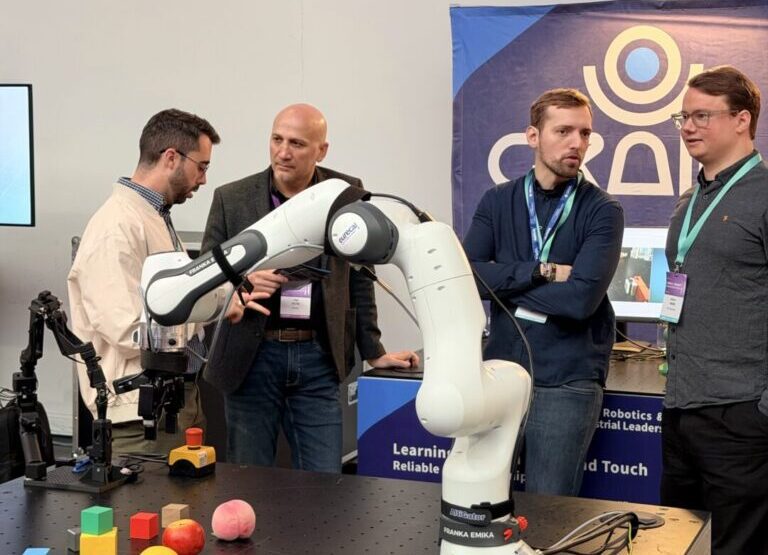
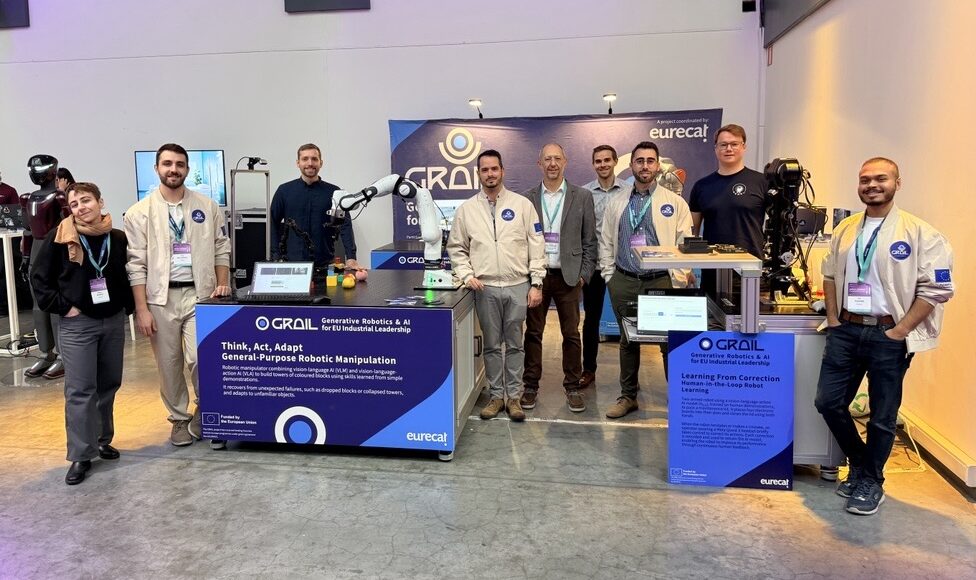
GRAIL brought Physical AI and advanced robotics into the spotlight of the Summit’s exhibition area, demonstrating how European research is advancing the development of more autonomous, adaptable and intelligent robotic systems for industrial applications.
The project presented four demonstrations developed by consortium partners Eurecat, the German Aerospace Center (DLR) and the Technical University of Darmstadt, showcasing complementary approaches to robot learning, manipulation and interaction with the physical world:
- Planning and executing complex robotic tasks – Eurecat. A demonstration of how AI-driven robotic systems can plan and execute complex sequences of actions, advancing their ability to operate more autonomously in industrial environments.
- Robot learning from human corrections – Eurecat. An approach that enables robots to improve their performance through human feedback and corrections, supporting more intuitive human–robot collaboration and continuous learning.
- Learning manipulation skills from few demonstrations – DLR and Eurecat. A robotic system capable of acquiring robust manipulation skills from a limited number of demonstrations, reducing the effort required to teach robots new tasks.
- Reliable robot manipulation through sight and touch – TU Darmstadt. A demonstration combining visual and tactile information to improve how robots perceive physical interactions and manipulate objects, contributing to more reliable performance in challenging manipulation tasks.
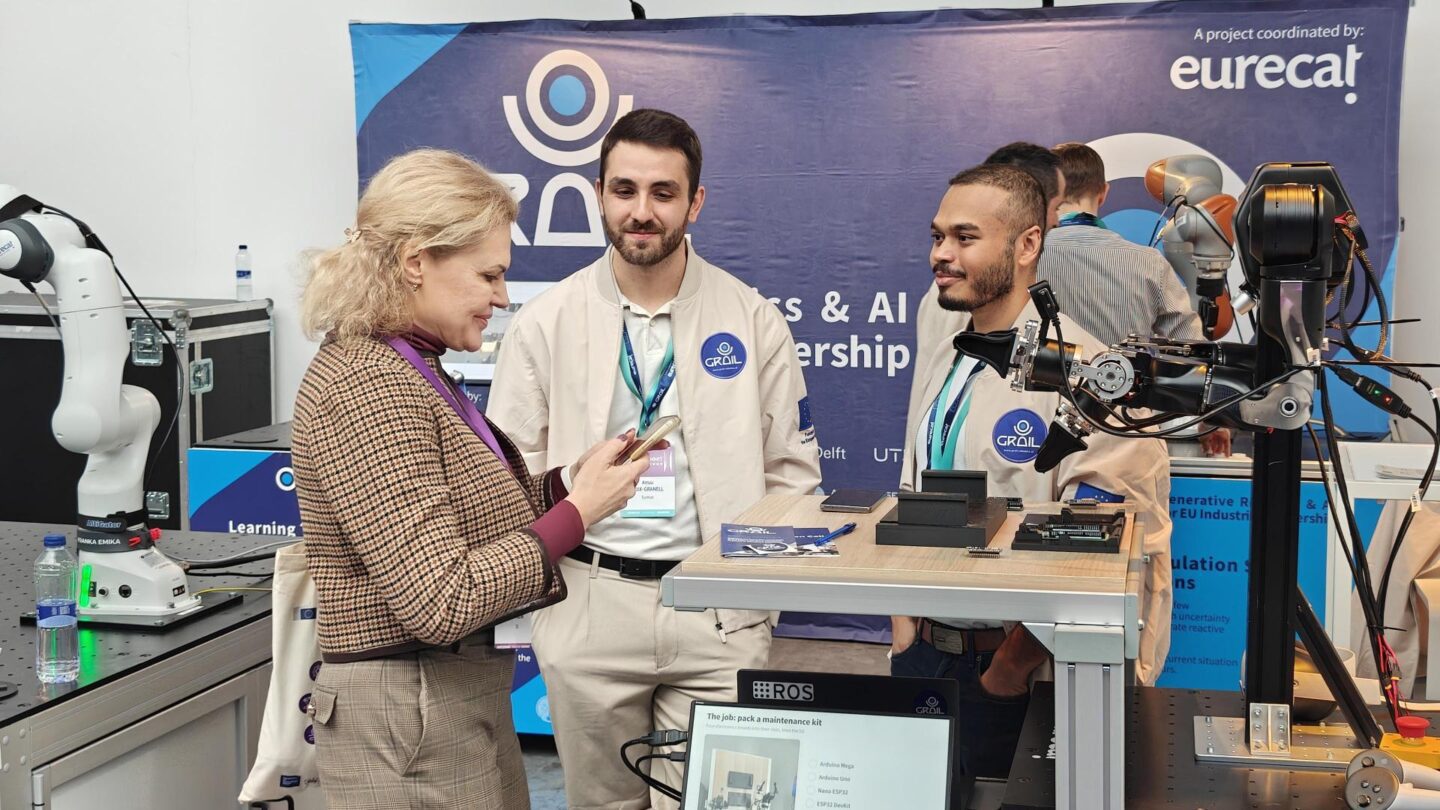
Together, these demonstrations illustrate different but complementary capabilities needed to advance general-purpose robotics, from task planning and learning efficiency to physical interaction and human-guided adaptation.
They contribute to GRAIL’s broader ambition to develop a European foundation model for robotics that can learn and generalise across different robotic platforms, tasks and industrial environments. By bringing together expertise in artificial intelligence, robotics and industrial applications, the project aims to accelerate the development of flexible, trustworthy and adaptable robotic systems for European manufacturing.
GRAIL’s participation in the Apply AI Summit provided an opportunity to demonstrate the potential of European Physical AI research and its contribution to the EU’s ambitions for industrial competitiveness and technological leadership.