
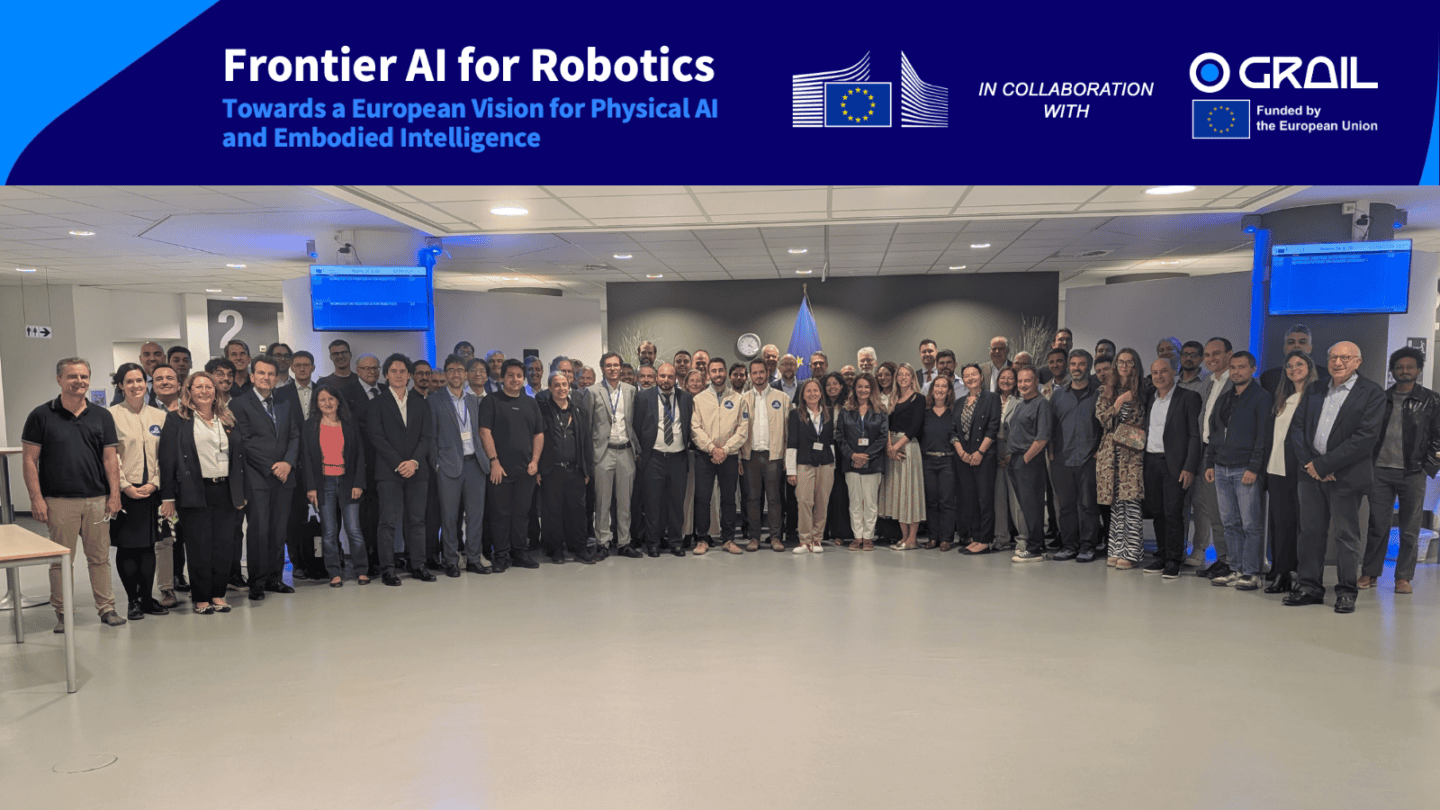
Leading researchers, robotics companies, industrial actors and European stakeholders met in Brussels to discuss the technological frontier of Physical AI and the capabilities Europe needs to turn research excellence into industrial leadership.
On 2 September 2026, the European Commission and the GRAIL project jointly organised the Frontier AI for Robotics Workshop – Towards a European Vision for Physical AI and Embodied Intelligence at the Albert Borschette Conference Centre in Brussels.
The workshop brought together over 80 leading representatives from academia, robotics and AI companies, industrial users, research and technology organisations and the European innovation ecosystem. The meeting was conceived as an open, evidence-driven discussion on competing and complementary approaches to Physical AI and the priorities that could strengthen Europe’s position.
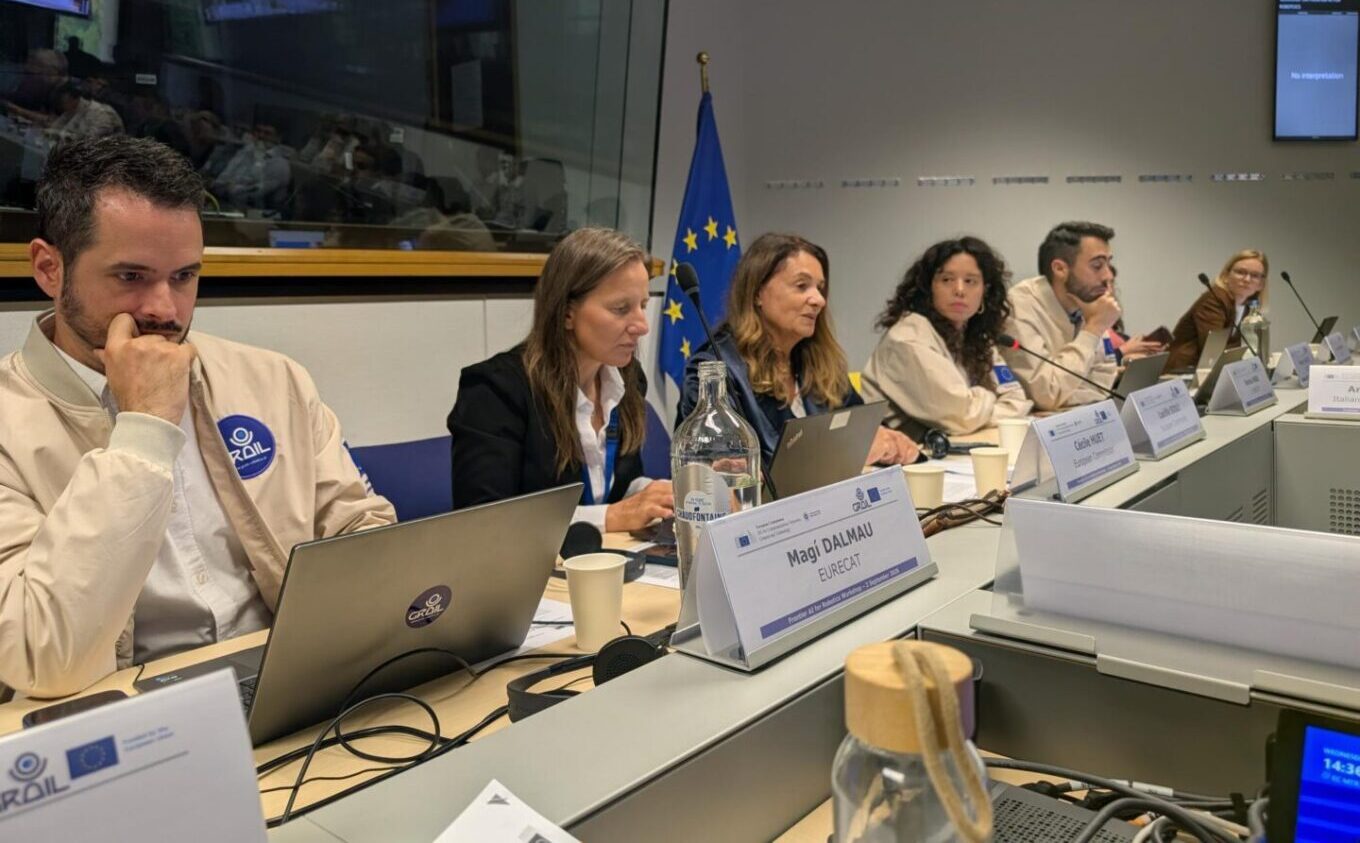
The discussion was opened by Lucilla Sioli, Director of the EU AI Office, who framed the strategic relevance of Frontier AI for Robotics for Europe. Cécile Huet, Head of Unit for Excellence in AI and Robotics at the European Commission, together with the GRAIL coordinating team, guided the technical exchanges throughout the afternoon. Sioli also delivered the closing remarks, reflecting on the priorities and next steps emerging from the debate.
Where is the technological frontier?
The first session explored different routes towards more capable and broadly deployable robotic intelligence. Arash Ajoudani (IIT) examined the limits of scaling models, data and compute in robotics and the need to better structure physical-world experience for learning, and Georgia Chalvatzaki (TU Darmstadt) brought the complementary perspective of modularity, structure and data-efficient approaches.
Moreover, Philipp Frey (ANYbotics) focused on the gap between promising demonstrations and reliable industrial deployment.
Together, their contributions opened a broader discussion on how scale, structure, robustness, physical grounding and real-world evidence can combine to advance Physical AI.
Building a European advantage
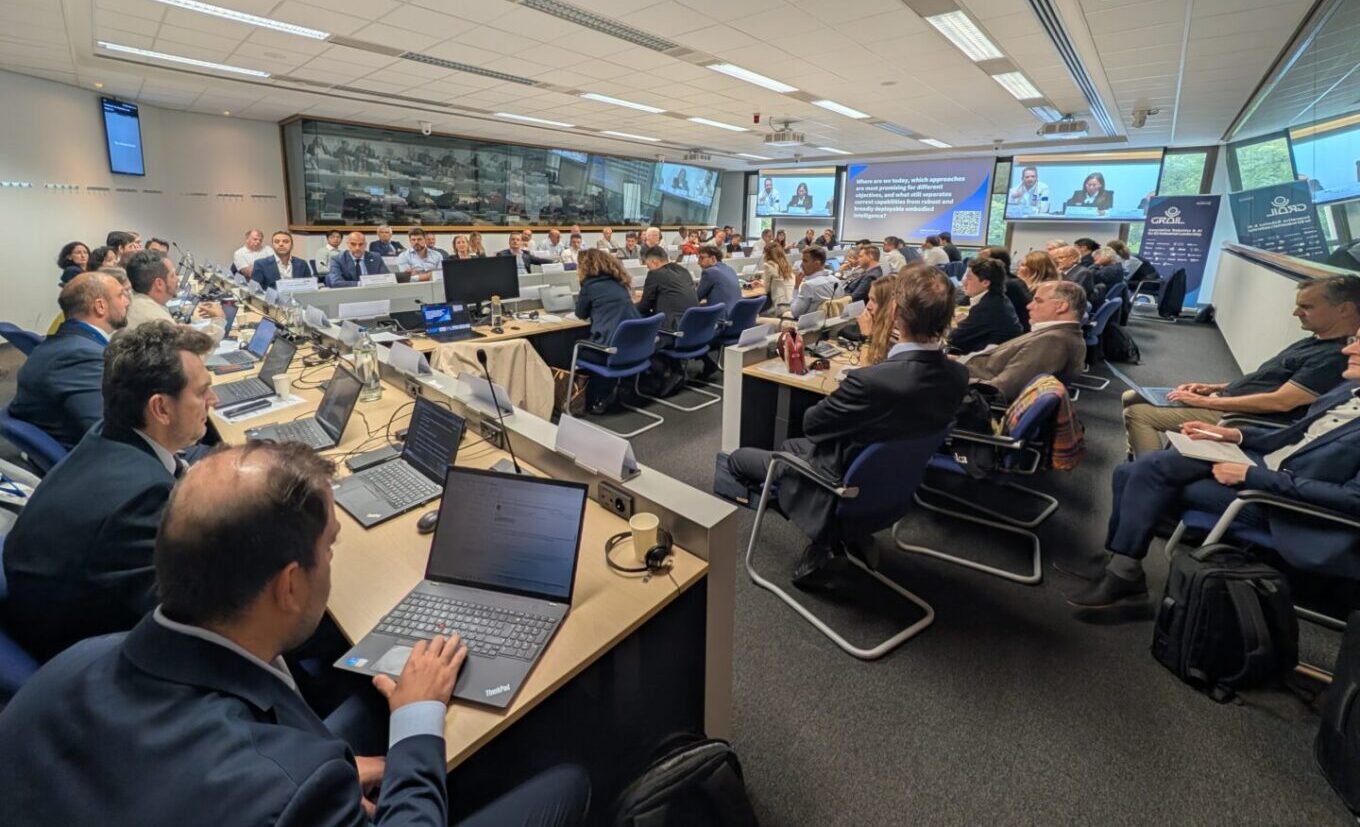
The second session shifted from technology to strategy, asking where Europe can lead and which shared capabilities are needed to compete globally. Aude Billard (EPFL / ELLIS) highlighted Europe’s strengths in human-centric, safe and sustainable robotics, while the perspective of Milad Malekzadeh (NEURA Robotics) focused on access to long-term compute and robotics data as critical enabling resources.
Moreover, Daniele Pucci (Generative Bionics) opened the discussion on moving from use-case-specific solutions towards more general-purpose Physical AI platforms and industrial scale-up.
These perspectives fed into an open exchange on infrastructure, data, deployment, research–industry collaboration and the conditions Europe needs to turn scientific excellence into competitive advantage.
Next steps
The workshop was designed to identify a limited number of priorities and capture both areas of convergence and legitimate differences of view.
The contributions will now feed into a concise community position paper, mapping key perspectives, evidence and strategic recommendations. The follow-up will also include a map of European capabilities and initiatives, covering research networks, industrial actors, compute, data facilities, robot platforms and testbeds, as well as a priority action roadmap identifying high-impact opportunities for coordinated European action.